Routing
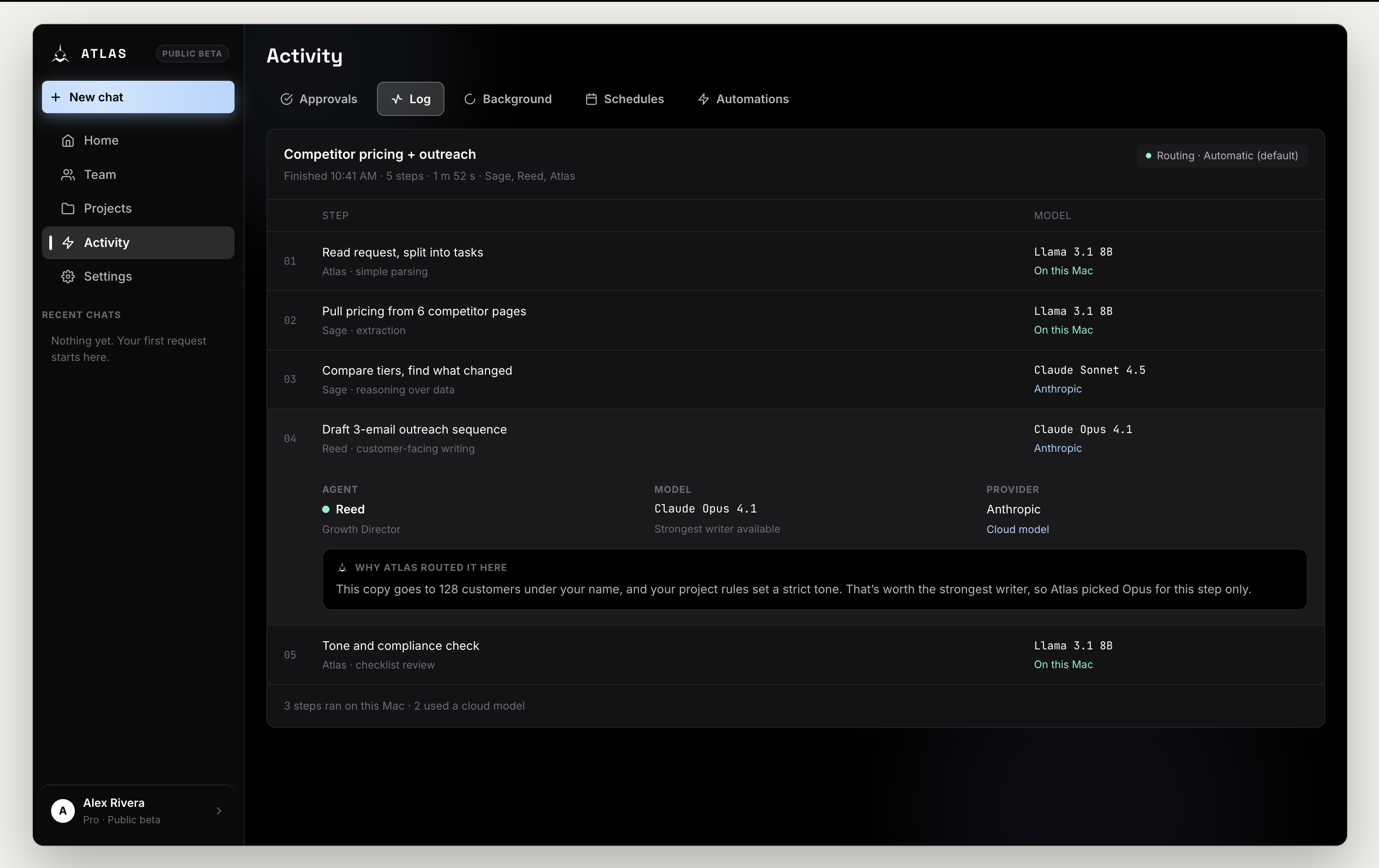
The newest model should not reset your workflow.
Atlas treats the AI products you already use as available capacity. You describe the outcome once; Atlas chooses the right agent and provider without making you compare every option first.
Why this exists
Atlas puts advanced agents, routing, memory, and control behind an interface that stays simple.

Meet the builder
I’m a 13-year-old builder in Toronto. I build AI tools I use every day, then write down what held up and what did not.
Atlas started with one annoyance: running one agent was easy, but running several meant five windows, repeated context, and no overview.
More about EvanProduct screens use staged sample data.
Atlas treats the AI products you already use as available capacity. You describe the outcome once; Atlas chooses the right agent and provider without making you compare every option first.
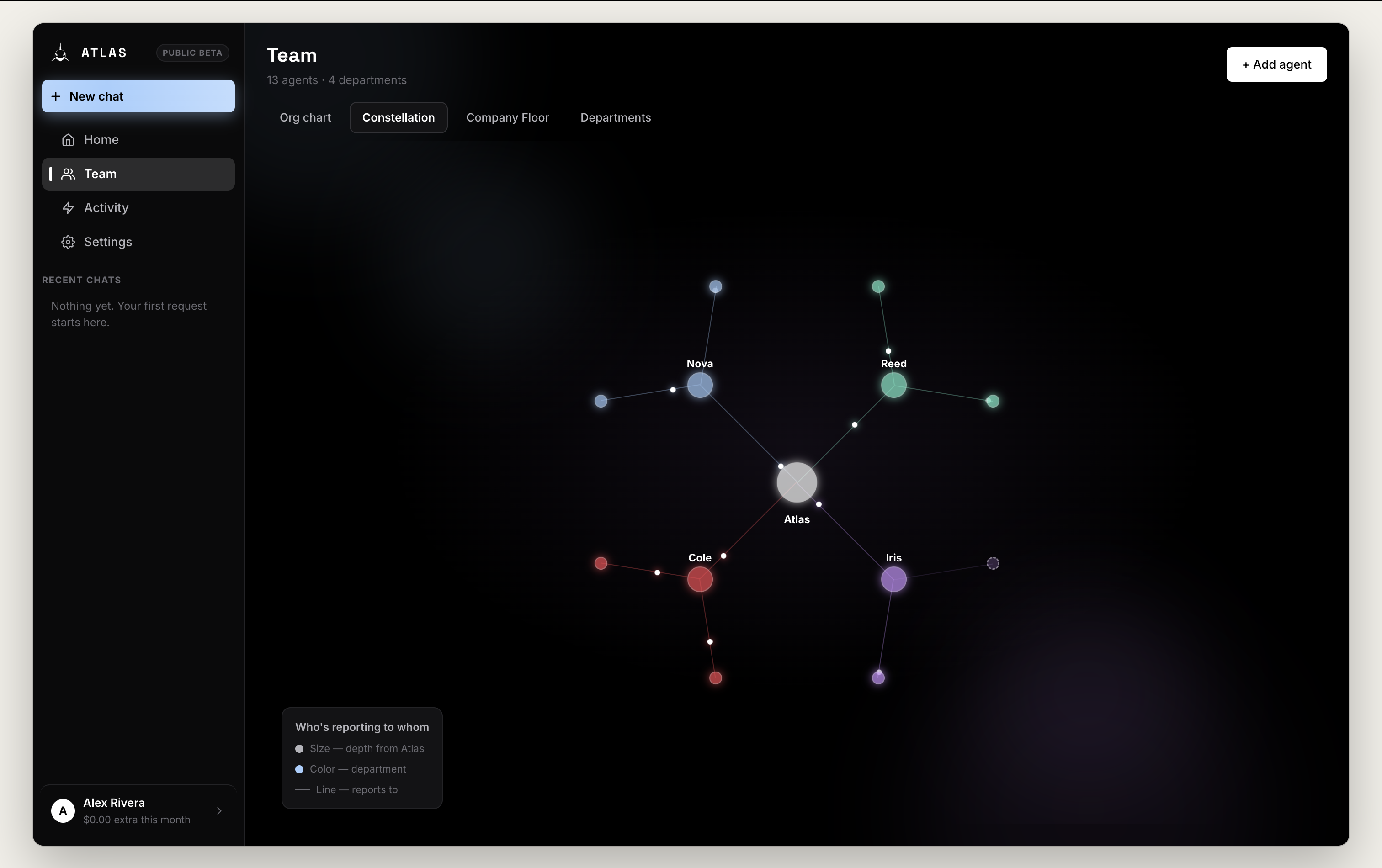
Defined roles, reporting lines, project memory, and connected tools give serious work the structure it needs. You should feel the clarity, not the configuration.
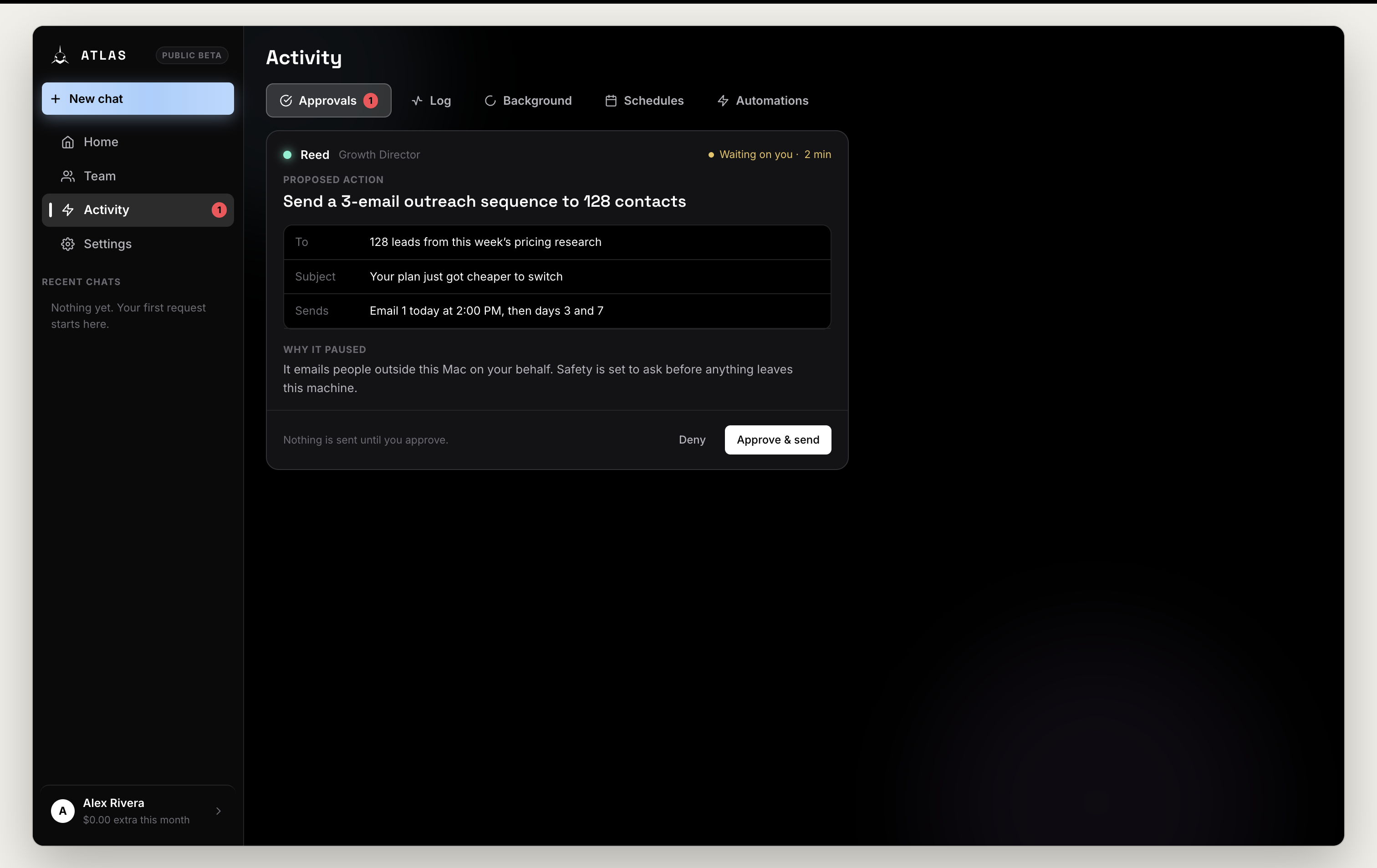
More autonomy should not mean less control. Sensitive actions stop where your sign-off matters, and the next step stays visible. Atlas works ahead without working around you.
The Atlas principle
Atlas can keep a hierarchy of agents, route work, preserve project context, and enforce permissions without asking you to wire every step together. The complexity earns its place behind the interface, not in front of you.